
Yellow ribbon meaning has evolved into a powerful symbol recognized worldwide. From its early roots in historical traditions to its modern use in raising awareness, the yellow ribbon represents hope, support, and solidarity.
People display it to honor military troops, show care for missing loved ones, or advocate for important health and social causes. Its simplicity belies its depth, allowing a single ribbon to convey heartfelt emotions and unite communities across the globe.
Understanding the yellow ribbon’s meaning helps us appreciate how a small gesture can carry enormous significance, turning awareness into action and creating connections that transcend distance, time, and circumstance.
Key Takeaways
- Symbol of Hope and Support: The yellow ribbon represents hope, love, and solidarity for causes like military support, missing children, and health awareness.
- Rich Historical Roots: Its origins trace back centuries, evolving through folklore, songs, and cultural moments into a widely recognized symbol.
- Versatile Meaning: Beyond the military, yellow ribbons raise awareness for mental health, cancer, suicide prevention, and other civilian causes.
- Encourages Action: Wearing or displaying a yellow ribbon sparks conversations, promotes understanding, and motivates communities to support meaningful causes.
- Small Gesture, Big Impact: Even a simple ribbon can connect people, inspire collective action, and make a tangible difference in society.
Yellow Ribbons Explained

Yellow ribbons have appeared in art, literature, public protests, awareness campaigns, and personal rituals. Their meanings shift depending on context, yet a shared emotional core remains. At its heart, the yellow ribbon symbolizes visibility, connection, and collective care.
History and Origin of Yellow Ribbons
The yellow ribbon has a long history rooted in tradition, symbolism, and shared human experience. In early societies, colored ribbons were used to express loyalty, hope, and identity, with yellow often linked to light, endurance, and optimism.
Its most recognized origins come from military folklore, where yellow ribbons symbolized faithfulness and waiting for loved ones to return from war. This idea became widely known through songs and stories in the nineteenth century and later gained strong visibility during twentieth-century conflicts, when families displayed yellow ribbons as signs of support and anticipation.
Ancient Use of Ribbons
The use of ribbons as symbolic markers dates back to ancient civilizations. In early societies, colored ribbons were worn to show allegiance, mark social roles, or communicate emotional states.
Yellow, often associated with sunlight and vitality, was linked to endurance and spiritual protection. Although the modern ribbon shape did not exist in its current form, the idea of color as a silent message was already well established.
Modern Resurgence and Popular Culture
The yellow ribbon gained widespread recognition in the 19th century through folk songs and military traditions. In the United States, the song “She Wore a Yellow Ribbon” popularized the image of a ribbon tied as a sign of waiting and loyalty.
During the 20th century, especially in times of war, families tied yellow ribbons around trees to express hope for the safe return of loved ones.
This cultural association laid the groundwork for the ribbon’s later use in public awareness campaigns.
Symbols and Meanings of Yellow Ribbons
Yellow ribbons symbolize hope, support, and remembrance. They show devotion to loved ones away, support for troops, and raise awareness for causes like suicide prevention, missing children, and cancer. Simple yet powerful, they unite communities and inspire care.
General Meanings
At a symbolic level, yellow represents visibility, warmth, and alertness. When shaped into a ribbon, it becomes a sign of remembrance and shared attention. Common general meanings include:
- Hope during uncertainty
- Support for individuals or communities
- Remembrance of absence or loss
- Public acknowledgment of a cause
The simplicity of the ribbon allows people from different backgrounds to attach personal meaning to it.
U.S. Military Support and Remembrance
One of the most recognized meanings of the yellow ribbon is support for military personnel. It represents solidarity with service members deployed overseas and respect for veterans.
Unlike political statements, the yellow ribbon functions as a nonverbal gesture of care, allowing people to express support without engaging in debate.
Civilian Causes and Public Awareness
Over time, the yellow ribbon expanded beyond military use. Civilian groups adopted it to raise awareness for health conditions, social justice movements, and humanitarian causes.
This shift transformed the ribbon into a flexible symbol capable of carrying multiple messages simultaneously.
Yellow Ribbon in Health Awareness
Health awareness is one of the most significant modern uses of the yellow ribbon. Its bright color attracts attention while maintaining a respectful tone.
Cancer Awareness and Support
Yellow ribbons are commonly associated with certain cancer awareness campaigns. They are used to honor patients, survivors, and caregivers, and to encourage early detection and research funding.
The ribbon becomes a visual reminder that illness is not only a medical issue but a social one that affects families and communities.
Mental Health and Suicide Prevention
In mental health advocacy, the yellow ribbon often symbolizes hope, resilience, and the importance of seeking help. Campaigns use it to reduce stigma and encourage open conversations.
Unlike symbols that focus on illness alone, the yellow ribbon emphasizes recovery and community support.
General Health Conditions
Beyond specific diseases, the yellow ribbon is sometimes used for broader health initiatives such as preventive care, disability awareness, and patient rights. Its adaptability makes it suitable for causes that require both sensitivity and visibility.
Popular Causes Represented by the Yellow Ribbon
The yellow ribbon represents a variety of important causes:
- Military Support: Shows solidarity with active-duty troops and veterans.
- Childhood Cancer Awareness: Highlights support for children fighting cancer.
- Bladder and Sarcoma Cancer Awareness: Raises attention for specific cancer types.
- Suicide Prevention and Mental Health: Promotes awareness and support for mental well-being.
- Missing Children and Social Causes: Signals hope and concern for vulnerable individuals.
Its versatility makes the yellow ribbon a universal symbol of care, awareness, and community support.
Childhood Cancer Awareness
Childhood cancer awareness is one of the most recognized uses of the yellow ribbon globally. The ribbon represents innocence, courage, and collective responsibility to support affected families. Awareness campaigns often combine the ribbon with fundraising and educational outreach.
Bladder Cancer Awareness
Bladder cancer awareness also uses the yellow ribbon to draw attention to early symptoms, screening, and research needs.
Compared to more widely discussed cancers, this cause benefits from the ribbon’s ability to spark curiosity and conversation.
Sarcoma Awareness
Sarcoma, a rare cancer, is another cause associated with the yellow ribbon. Here, the ribbon serves an important role in visibility, helping lesser-known conditions gain public recognition and funding.
Awareness Ribbons and Color Symbolism
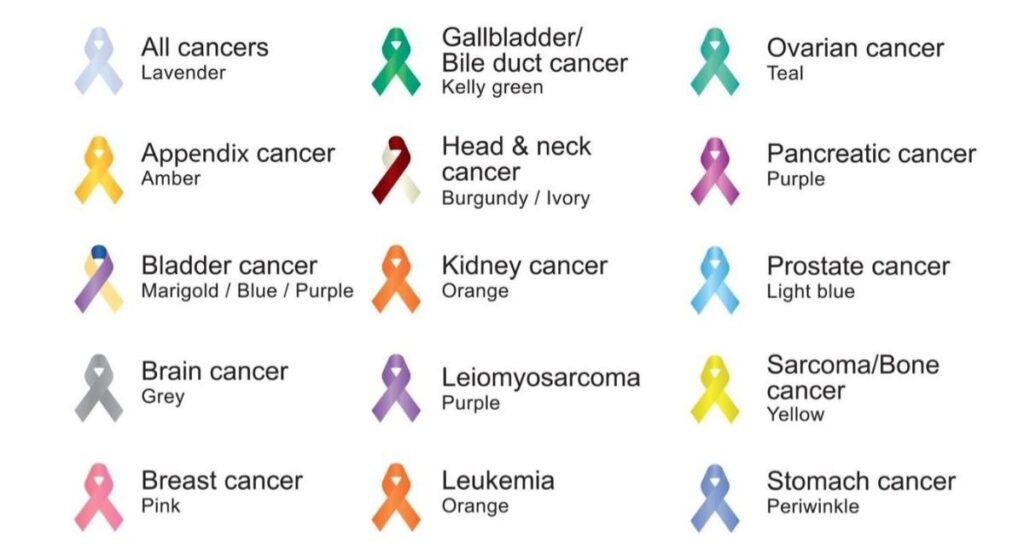
Awareness ribbons use colors to represent causes and raise public attention. Each color conveys a specific message, creating a simple, recognizable way to show support.
- Pink: Breast cancer awareness
- Red: HIV/AIDS support
- White: Peace or lung cancer awareness
- Orange: Leukemia or anti-bullying campaigns
- Blue: Child abuse prevention or prostate cancer
- Green: Mental health, environmental causes, or cerebral palsy
- Purple: Domestic violence or pancreatic cancer
Yellow ribbons stand out for military support, suicide prevention, missing children, and cancer awareness, demonstrating how a single color can symbolize multiple important causes.
Overview of Awareness Ribbon Colors
Awareness ribbons use color psychology to communicate emotional messages quickly. Each color signals a different tone and purpose.
| Ribbon Color | Common Associations | Emotional Message |
| Yellow | Hope, remembrance, awareness | Visibility and care |
| Pink | Breast cancer | Compassion and solidarity |
| Red | HIV/AIDS, heart disease | Urgency and action |
| Blue | Mental health, child abuse prevention | Trust and protection |
| Purple | Alzheimer’s, domestic violence | Dignity and strength |
Specific Colors and Associated Causes
While colors help differentiate causes, overlap is common. The yellow ribbon stands out because it is used across multiple fields rather than one exclusive issue. This broad usage increases recognition but also requires clear context in campaigns.
The Sociopolitical Impact of Yellow Ribbons
Yellow ribbons carry significant social and political meaning. They unite communities, show solidarity, and draw attention to important issues.
Historically, they symbolized support for troops during wars like the Gulf War, but their use expanded to health awareness, missing children, and advocacy campaigns.
By appearing in public spaces, media, and events, yellow ribbons influence public perception, encourage collective action, and create a shared sense of hope and responsibility, making them a powerful tool for social and political engagement.
Commemorative and Supportive Functions
Yellow ribbons often appear during national crises, memorial events, and collective mourning. They provide a shared visual language that allows people to grieve or show solidarity together without words.
Military and Veterans
In military contexts, the yellow ribbon functions as both a personal and national symbol. It bridges the gap between civilian life and military service, reminding the public of the human cost of conflict.
Civil Rights and Advocacy
Some civil rights movements have adopted the yellow ribbon to represent awareness and reform. In these cases, the ribbon becomes a quiet but persistent reminder of ongoing struggles, particularly when louder forms of protest are restricted or discouraged.
Personal and Collective Mourning
On a personal level, people use yellow ribbons to honor loved ones who are absent due to illness, deployment, or loss. On a collective level, communities use them to process shared trauma and express resilience.
How to Show Support with a Yellow Ribbon

Showing support with a yellow ribbon is simple but meaningful. You can wear it on clothing, tie it around trees, cars, or homes, or display it at events to raise awareness for causes like military support, suicide prevention, or missing children.
Sharing its meaning on social media amplifies the message, encouraging others to participate. Even small gestures, like gifting yellow ribbons or using them in community displays, help spread hope, solidarity, and awareness for the causes you care about.
Finding and Using Yellow Awareness Ribbon Products
Yellow ribbons are available as pins, bracelets, decals, and digital icons. Choosing ethically produced or cause-linked products ensures that symbolic support translates into real impact.
Effective ways to use a yellow ribbon include:
- Wearing it during awareness months
- Displaying it at events or public spaces
- Sharing it in digital campaigns with clear messaging
- Pairing it with educational content or donations
The key is intention. A ribbon gains meaning when it is connected to action or understanding.
The Yellow Ribbon as a Call to Action
The yellow ribbon is more than a symbol—it’s a call to act. It inspires people to support troops, raise awareness for health issues, or stand with communities in need. Displaying a yellow ribbon encourages conversation, sparks charitable efforts, and motivates collective participation.
By wearing or sharing it, individuals contribute to meaningful change, showing that even a small gesture can make a big impact. It also serves as a visual reminder that hope, solidarity, and advocacy are ongoing efforts, inviting everyone to take part in creating positive social change.
A Small Gesture with Big Meaning
The effectiveness of the yellow ribbon comes from its simplicity. It does not overwhelm or divide. Instead, it offers a gentle reminder that awareness begins with noticing. Small gestures, when repeated across communities, can shift public attitudes and priorities.
A yellow ribbon may seem simple, but its impact is profound. This small symbol represents hope, support, and solidarity, connecting people across communities and causes. Whether worn on clothing, tied to a tree, or shared online, it conveys care and compassion.
Even a modest gesture like displaying a yellow ribbon can inspire awareness, encourage action, and strengthen bonds, proving that meaningful change often starts with something as small as a single ribbon.
Why the Yellow Ribbon Still Matters Today
In an age of digital activism and fast-moving trends, the yellow ribbon remains relevant because it is timeless. It adapts to new causes while preserving its core message of hope, remembrance, and shared responsibility.
Whether tied to a tree, worn on a jacket, or shared online, the yellow ribbon continues to connect individuals to collective care.
Its enduring presence reminds us that awareness is not just about visibility. It is about empathy, action, and the willingness to stand with others, even in silence.
Final Thoughts
The yellow ribbon is a timeless symbol that combines simplicity with powerful meaning. From its historical roots to its role in modern awareness campaigns, it represents hope, support, and unity across military, health, and social causes.
Its versatility allows anyone to participate, whether by wearing it, displaying it, or sharing its significance online. More than just a ribbon, it serves as a gentle reminder that small gestures can inspire big change, foster solidarity, and keep important conversations alive.
In a world that often feels divided, the yellow ribbon continues to unite people through compassion, care, and action.
FAQ’s
What does the yellow 🎗 mean?
A yellow ribbon represents hope, support, and awareness for causes like military troops, missing children, and health issues.
What is the symbol of 🎗?
The 🎗 emoji is a yellow awareness ribbon, symbolizing solidarity, remembrance, and advocacy for various causes.
What does yellow ribbon mean?
It signifies support, hope, and care for individuals or communities facing challenges, including health, military, and social causes.
What does the yellow ribbon mean 🎗 for Israel?
In Israel, the yellow ribbon often symbolizes support for soldiers and remembrance of those missing in action.
What does this emoji mean 💝?
The 💝 emoji represents a gift of love or affection, often used to express care and heartfelt feelings.
What is the story behind “tie a yellow ribbon”?
The phrase comes from a 1970s song, inspired by folklore, where a yellow ribbon signaled hope and welcome for loved ones returning home.
What does 🎀 mean from a girl?
The 🎀 emoji usually conveys femininity, cuteness, or a gift-like gesture, often used in a playful or affectionate context.
Is the yellow ribbon a religious symbol?
No, it is not a religious symbol; it represents hope, support, and awareness across social and health causes.
What does the yellow ribbon emoji stand for?
The 🎗 emoji stands for solidarity, support, and awareness for military, health, or other social causes.
Conclusion
In conclusion, the yellow ribbon meaning is much more than a simple piece of fabric—it embodies hope, support, and remembrance. Over centuries, it has evolved from historical traditions to a modern symbol recognized across cultures and causes. Whether displayed for military troops, health awareness campaigns, or social advocacy.
The yellow ribbon serves as a visible sign of solidarity and care. Its power lies in its simplicity, reminding us that even small gestures can make a big impact. By understanding the yellow ribbon meaning, we can honor loved ones, support important causes, and inspire communities to come together in compassion, unity, and meaningful action.
