
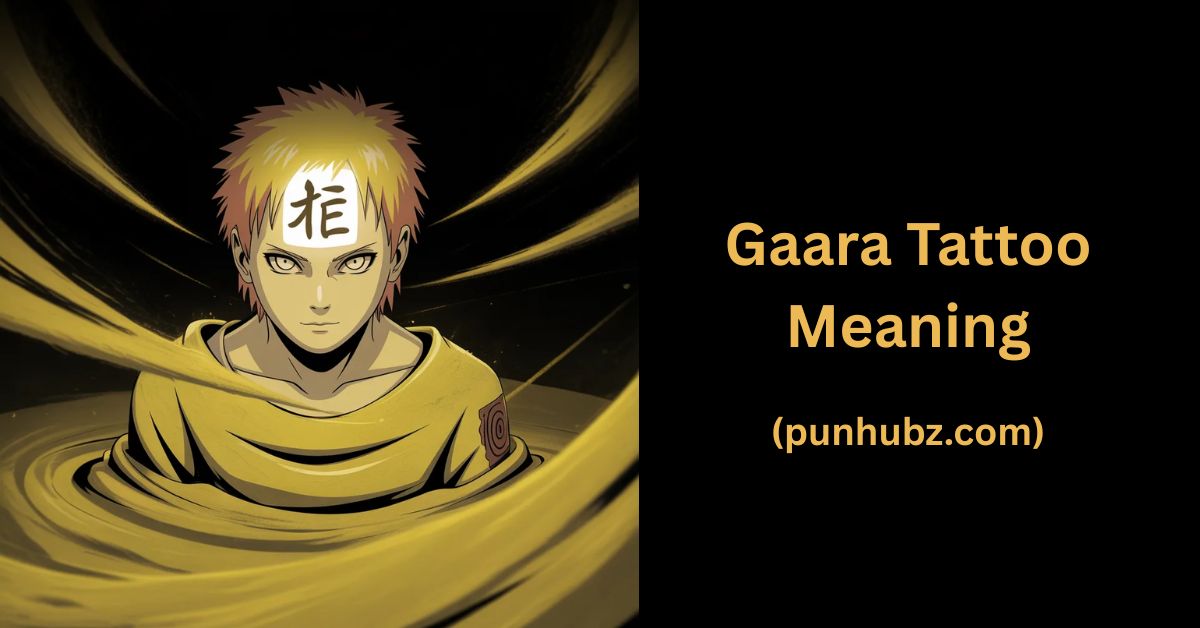
Gaara tattoo meaning goes far beyond a simple mark on the forehead it is a powerful symbol of pain, resilience, and transformation. Originating from Gaara’s tragic childhood in the Naruto series, the tattoo represents his journey from isolation and fear to self-discovery and redemption.
Carved with the kanji for “love,” it reflects not only his struggle with emotional abandonment but also his eventual understanding of compassion, self-worth, and connection with others.
For fans, this iconic symbol resonates deeply, embodying themes of personal growth, healing, and inner strength.Exploring the Gaara tattoo meaning reveals how a single design can capture profound human emotions.
Gaara’s Childhood and Emotional Foundations

Gaara’s early life forms the psychological bedrock of his symbol. Unlike many anime characters whose suffering is episodic, Gaara’s pain is systemic and institutional.
Gaara’s Father
The Fourth Kazekage viewed Gaara not as a child but as a weapon. His repeated assassination attempts framed Gaara’s existence as a threat rather than a life worth protecting.
This parental rejection establishes the core conflict between worth and survival that later manifests in the tattoo.
Gaara’s Mother
Karura’s death during childbirth and her role as Gaara’s spiritual protector are central to the symbol’s later reinterpretation. Although absent physically, her chakra-infused sand represents unconditional love, contrasting sharply with the village’s cruelty.
Yashamaru and Gaara
Yashamaru’s betrayal is the emotional rupture that reshapes Gaara’s worldview. As the last perceived source of affection, his confession that Karura never loved Gaara destroys the child’s remaining trust in human connection.
The Betrayal that Scarred Gaara’s Soul
This betrayal directly precedes Gaara carving the kanji for “love” into his own flesh. The act is not symbolic at first. It is defensive. Love becomes something Gaara believes only he can give himself.
The Catalyst for Gaara’s Emotional Awakening
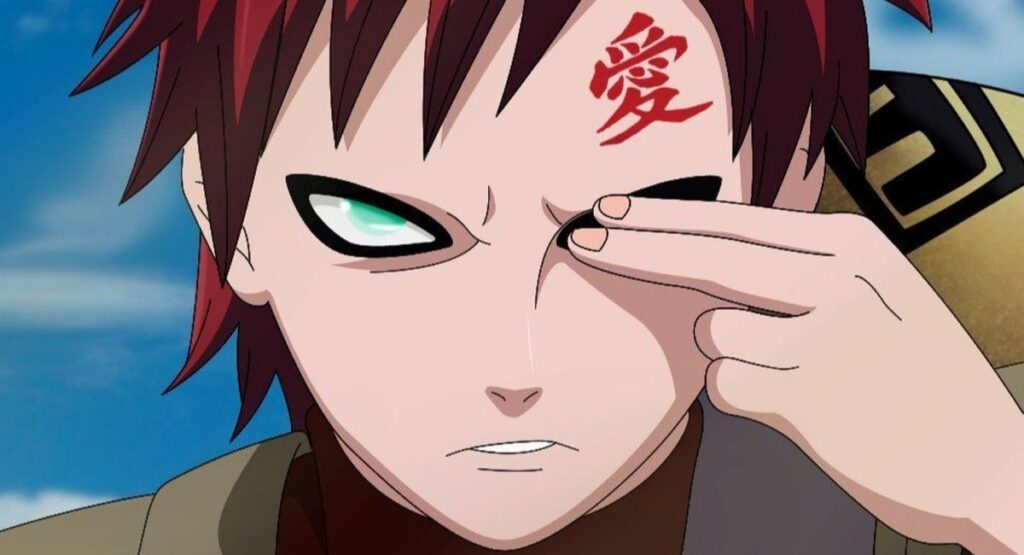
The catalyst for Gaara’s emotional awakening was the profound betrayal by his uncle, Yashamaru, and the realization that he had never been truly loved.
This pivotal moment sparked his journey from self-loathing toward understanding the nature of love and human connection.
Embracing a Twisted Perception of Love
Gaara equates love with self-preservation. His belief system becomes absolutist: survival proves existence, and killing affirms worth. The tattoo functions as a reminder of this distorted philosophy.
From Isolation to Inner Conflict
While Gaara projects emotional detachment, internal conflict grows. The symbol begins to hold tension between what love should be and what Gaara believes it is. This psychological dissonance sets the stage for transformation.
The Origin of Gaara’s Tattoo
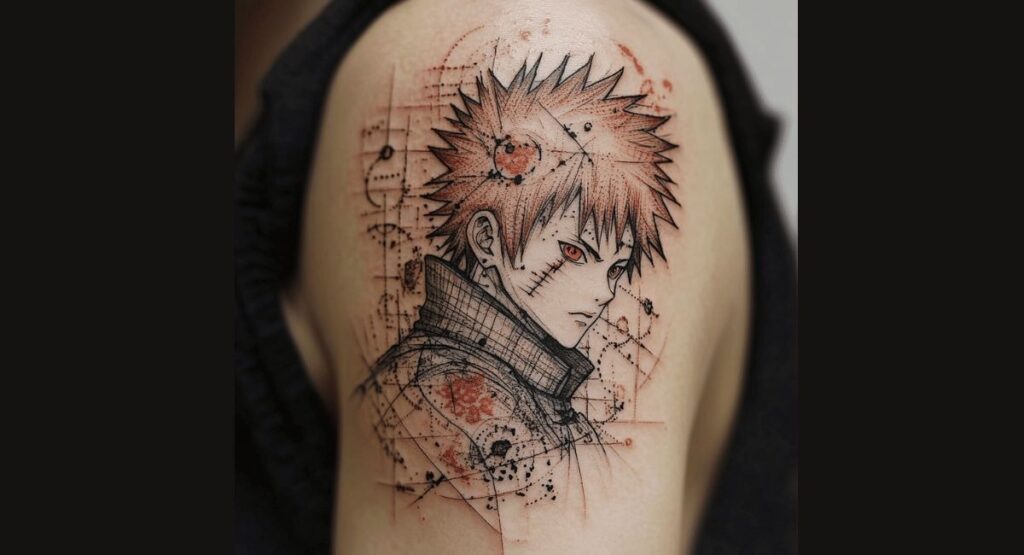
Gaara’s tattoo originated from his traumatic childhood experiences and feelings of rejection. Carved by himself, the kanji for “love” became a symbol of his self-imposed isolation and a way to assert control over his identity amid betrayal and loneliness.
What Does the Mark on Gaara’s Head Mean
The tattoo is the kanji 愛 (ai), meaning love. Its placement on the forehead is significant. In Japanese symbolism, the forehead represents identity and intent. Gaara’s choice makes love inseparable from his sense of self.
The Origin of the “Love” Kanji
The kanji 愛 contains components associated with heart, movement, and acceptance. Linguistically, it implies active, relational love, making Gaara’s initial interpretation deeply ironic.
Cultural and Linguistic Context of the Gaara Symbol
In Japanese culture, kanji tattoos are not traditionally common and often carry heavy semantic weight. Gaara’s mark is intentionally confrontational, challenging both cultural norms and narrative expectations.
This context is often ignored in competitor content, yet it is crucial for understanding why the symbol feels unsettling rather than decorative.
Deeper Symbolism Behind the “Love” Kanji
| Component | Symbolic Meaning | Relevance to Gaara |
| Heart radical | Emotion and compassion | Suppressed but present |
| Enclosure | Protection | Defensive worldview |
| Movement | Action through feeling | Violence as expression |
This internal structure mirrors Gaara’s emotional architecture during his early life.
The Psychology Behind Gaara’s Symbol
From a psychological perspective, the tattoo reflects trauma-induced identity formation. Gaara demonstrates traits associated with complex childhood trauma, including emotional numbing, hypervigilance, and identity foreclosure. The tattoo externalizes his internal narrative: love exists, but only through isolation.
The Transformation of Gaara’s Tattoo Meaning
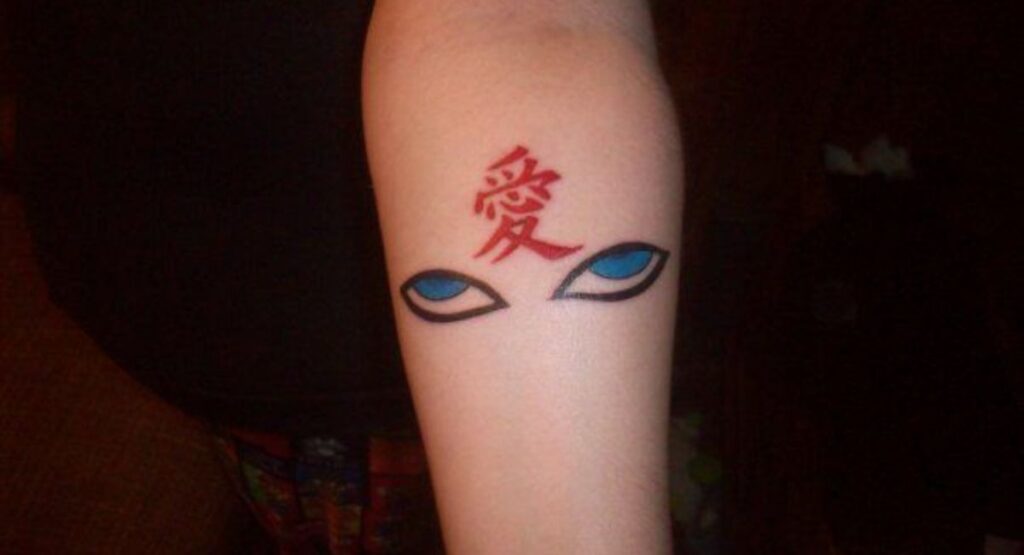
Gaara’s tattoo evolved from a mark of self-loathing to a symbol of self-acceptance, reflecting his journey from isolation to empathy and leadership.
It came to embody his resilience, personal growth, and the power of love as protection rather than pain.
From Self-Loathing to Self-Acceptance
Gaara’s evolution does not erase the symbol. Instead, it reframes it. Love shifts from isolation to responsibility.
Embracing the Sand as a Manifestation of His Mother’s Love
The realization that Karura’s spirit protects him redefines the tattoo’s meaning retroactively. What was once carved in despair becomes evidence of a love that existed all along.
The Transformation From Monster to Guardian
As Kazekage, Gaara embodies protective love. The tattoo no longer signifies survival through violence but strength through restraint.
Naruto’s Role in Gaara’s Redemption
Naruto helped Gaara transform from a vengeful outcast to a compassionate leader. By showing empathy and trust, he inspired Gaara to turn his symbol of pain into one of purpose and growth.
Through their bond, Naruto demonstrated that understanding and connection can heal deep emotional wounds, reshaping Gaara’s identity and outlook on life.
Naruto vs Gaara
Their battle is ideological rather than physical. Naruto represents relational resilience, challenging Gaara’s belief that pain must isolate.
Naruto’s Speech to Gaara
Naruto’s acknowledgment of shared loneliness dismantles Gaara’s worldview. Love becomes something mutual rather than solitary.
Naruto Saved Gaara
Redemption occurs not through defeat but recognition. This moment reanchors the tattoo’s meaning permanently.
The Dual Nature of the Gaara Symbol
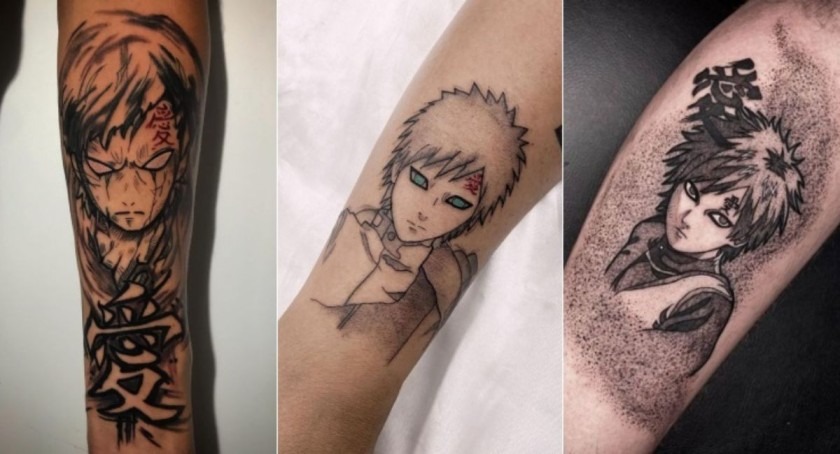
The Gaara symbol embodies a dual nature, representing both pain and healing. It reflects the coexistence of suffering and strength, showing that personal scars can transform into wisdom.
On one hand, the tattoo recalls Gaara’s traumatic past, isolation, and self-loathing, symbolizing the struggles that shaped him. On the other hand, it signifies growth, compassion, and resilience, highlighting his journey from a feared outcast to a protective leader.
This duality makes the symbol deeply relatable, reminding fans that hardship and recovery often exist side by side, and that strength often arises from facing one’s inner challenges.
Spiritual and Emotional Interpretation
Spiritually, the tattoo can be read as a mark of karmic learning. Emotionally, it reflects post-traumatic growth, where suffering becomes a source of empathy rather than destruction.
| Category | Meaning & Insight |
| Spiritual Insight | The tattoo represents awakening and growth through personal suffering. |
| Emotional Insight | Encourages self-love and acceptance of past pain as part of one’s journey. |
| Transformative Symbol | Mark’s personal transformation from isolation and hurt to compassion and resilience. |
| Life Lesson | Inspires overcoming adversity and finding strength within oneself. |
The Lasting Impact of Gaara’s Tattoo
Gaara’s tattoo has left a lasting impression beyond the anime, symbolizing resilience, personal growth, and emotional transformation.
It resonates with fans as a mark of overcoming hardship, inspiring self-reflection and the pursuit of inner strength. The design’s narrative depth ensures its continued relevance in tattoo culture and popular media.
A Timeless Symbol of Overcoming Adversity
Gaara’s tattoo has become a universal emblem of resilience, representing the ability to overcome personal struggles and transform pain into strength.
Inspiring Fans to Reflect on the Meaning of Love
The tattoo encourages fans to reconsider love as self-acceptance and compassion, inspiring them to define emotional connections on their own terms.
A Lasting Legacy in Tattoo Culture
Its enduring popularity comes from the rich story and symbolism behind it, making it a meaningful choice for fans rather than just a visual design.
Gaara’s Symbol in Pop Culture and Fandom
In fandom spaces, the symbol functions as identity signaling. It often aligns with communities centered on mental health awareness and personal recovery.Gaara’s tattoo has become an iconic symbol in anime culture.
Fans celebrate it through cosplay, art, and merchandise, using it to express emotional resilience and personal connection to his story. Online communities reinterpret the tattoo as a message of self-love and overcoming hardship, making it a powerful emblem beyond the series itself.
Gaara Tattoo Meaning in Different Contexts
A Gaara tattoo can symbolize personal growth and redemption, marking resilience through challenges. It also reflects self-love and identity, honoring one’s worth after rejection.
For fans, it shows fandom and loyalty to Gaara’s story, while spiritually, it represents balance between shadow and compassion, turning pain into strength and empathy.
Personal Growth and Redemption
A Gaara tattoo often symbolizes the journey from hardship to healing. People choose it to mark personal milestones, overcoming struggles, and embracing transformation as a testament to resilience and inner strength.
Self-Love and Identity
The tattoo reflects a commitment to self-worth and self-acceptance. For those who have faced neglect or emotional rejection, it serves as a reminder to prioritize and honor their own identity and value.
Anime Fandom and Symbolic Loyalty
For fans of Naruto, the tattoo goes beyond aesthetic appeal. It represents deep engagement with Gaara’s story, his growth, and the lessons his character imparts, rather than simply following a trend.
Spiritual Symbol
Spiritually, the tattoo embodies the balance between darkness and compassion. It highlights emotional awareness, resilience, and the ability to transform pain into understanding and empathy for oneself and others.
Why People Choose a Gaara Tattoo
People choose a Gaara tattoo to symbolize personal growth, self-love, resilience, and transformation. Fans also get it to honor Gaara’s character and the Naruto series, making it a meaningful blend of emotion, identity, and fandom.
Reasons Fans Choose a Gaara Tattoo:
- Personal Growth and Redemption:
Fans select this tattoo to mark life transitions or overcoming significant hardships. It symbolizes the journey from struggle to self-improvement. - Self-Love and Identity:
The tattoo represents reclaiming self-worth after neglect or emotional rejection. It reminds wearers to value themselves first. - Anime Fandom and Symbolic Loyalty:
It shows deep narrative engagement and devotion to Gaara’s story, not just casual fandom. Fans display their connection to the character’s journey. - Spiritual Symbol:
The tattoo embodies the balance between pain and compassion, reflecting inner healing. It is a reminder of transformation through emotional growth. - Emotional Healing:
Many choose it as a personal emblem of resilience, helping them overcome past trauma. It serves as a source of comfort and strength. - Inspiration and Motivation:
The tattoo inspires wearers to embrace challenges and pursue personal growth. It acts as a motivational symbol for self-improvement.
Popular Tattoo Design Ideas
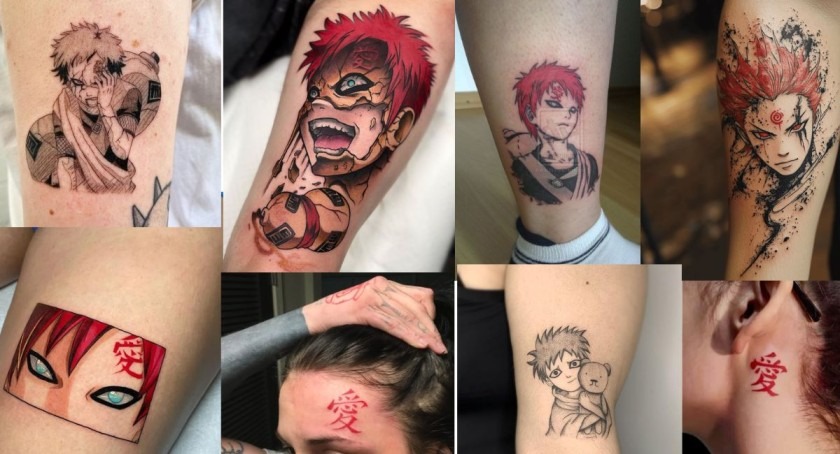
Gaara tattoos can be designed in many creative ways, from the traditional kanji “愛” to minimalist or narrative-driven designs. Fans also choose full portraits, stylized kanji, or negative space techniques to reflect personal meaning and transformation.
| Design Type | Description | Placement Ideas | Special Features |
| Kanji “愛” (Love) | Traditional design replicating the anime | Forehead, Chest, Shoulder Blade | Bold, classic, directly mirrors Gaara’s symbol |
| Minimalist Black Ink | Subtle and simple version | Wrist, Behind Ear, Ankle | Low-profile, modern, discreet |
| Kanji + Sand Gourd | Combines symbol with Gaara’s iconic gourd | Back, Upper Arm | Narrative-driven, detailed, tells a story |
| Full Portrait | Gaara’s face with tattoo | Forearm, Thigh, Back | Highly detailed, expressive artwork |
| Creative Variations | Shattered, glowing, or stylized kanji | Arm, Leg, Back | Represents transformation, resilience, or personal growth |
| Negative Space Technique | Kanji appears etched or glowing | Forearm, Upper Arm, Back | Gives a 3D effect, anime-inspired aesthetic |
Choosing the Right Tattoo Artist
Choosing the right tattoo artist is essential for bringing your Gaara tattoo to life with precision and meaning. A skilled and experienced artist ensures both the design’s accuracy and a safe, professional process.
- Specialization: Look for artists experienced in fine line or anime-style tattoos.
- Portfolio Review: Check previous work for consistency, detail, and shading skills.
- Communication: Choose someone who listens, understands your vision, and offers guidance.
- Understanding Symbolism: Ensure the artist appreciates the tattoo’s meaning to preserve its significance.
- Professionalism: Verify hygiene standards, licensing, and studio reputation.
- Creative Input: An expert can suggest enhancements while respecting your original idea.
- Comfort and Trust: Work with someone you feel confident and comfortable with throughout the process.
Aftercare for a Gaara Tattoo
Proper aftercare is essential for a Gaara tattoo, especially because most designs involve fine kanji lines where even slight fading or distortion can change the meaning. Healing is not just about appearance; it protects the integrity of the symbol itself.
- Follow instructions: Follow your tattoo artist’s guidance carefully, especially during the first 24 hours.
- Bandage: Keep the bandage on for the recommended time to protect the fresh tattoo.
- Cleanse: Clean gently with lukewarm water and mild, fragrance-free soap; pat dry.
- Moisturize: Apply a thin layer of moisturizer or tattoo ointment 2–3 times daily.
- Avoid scratching: Do not scratch or pick scabs, even if itching occurs.
- Sun & water: Avoid direct sunlight, tanning, swimming, saunas, and hot baths until healed.
- Clothing: Wear loose clothing to prevent friction and irritation.
- Aftercare: Use sunscreen and moisturize regularly after healing to preserve the tattoo.
Final Thoughts
The Gaara tattoo meaning cannot be reduced to a single interpretation. It is a living symbol shaped by pain, growth, and moral responsibility. Its power lies in its honesty. Love, in Gaara’s story, is not gentle by default. It is learned, earned, and chosen.
That complexity is precisely why the symbol continues to resonate across cultures, mediums, and personal narratives.
FAQ’s
What does Gaara’s tattoo mean?
Gaara’s tattoo is the kanji for “love” (愛), symbolizing self-love born from loneliness and emotional pain.
What does Gaara’s curse mark mean?
Gaara’s curse mark represents his inner turmoil and the fearsome power of the One-Tailed Beast, Shukaku, sealed within him.
What does Gaara symbolize?
Gaara symbolizes transformation, resilience, and the journey from isolation to compassion and leadership.
What does Gaara’s symbol mean in Japanese?
In Japanese, the kanji 愛 (ai) stands for “love,” reflecting both self-preservation and eventual compassion.
Who has a crush on Gaara?
Temari, his sister, and several fans within the series admire him, but his strongest bonds are based on respect and trust.
What does the 3 line tattoo mean?
The three-line tattoo isn’t canonically defined; it is often used in fan art to represent Gaara’s sand powers or emotional scars.
Why does Gaara cover his eyes?
Gaara covers his eyes to hide his vulnerability and to control the destructive power of Shukaku within him.
Conclusion
The Gaara tattoo meaning is much more than an artistic design; it is a testament to resilience, transformation and emotional depth. From a symbol of loneliness and self-protection, it evolves into a mark of redemption, self-love, and leadership.
Fans who embrace this tattoo find inspiration in Gaara’s journey, reflecting on the power of overcoming adversity and redefining personal identity. The tattoo’s significance spans emotional, spiritual, and cultural dimensions, making it a symbol that resonates far beyond the Naruto universe.
Understanding the Gaara tattoo meaning encourages self-reflection, empathy, and the recognition that strength often emerges from the most challenging experiences in life.
