
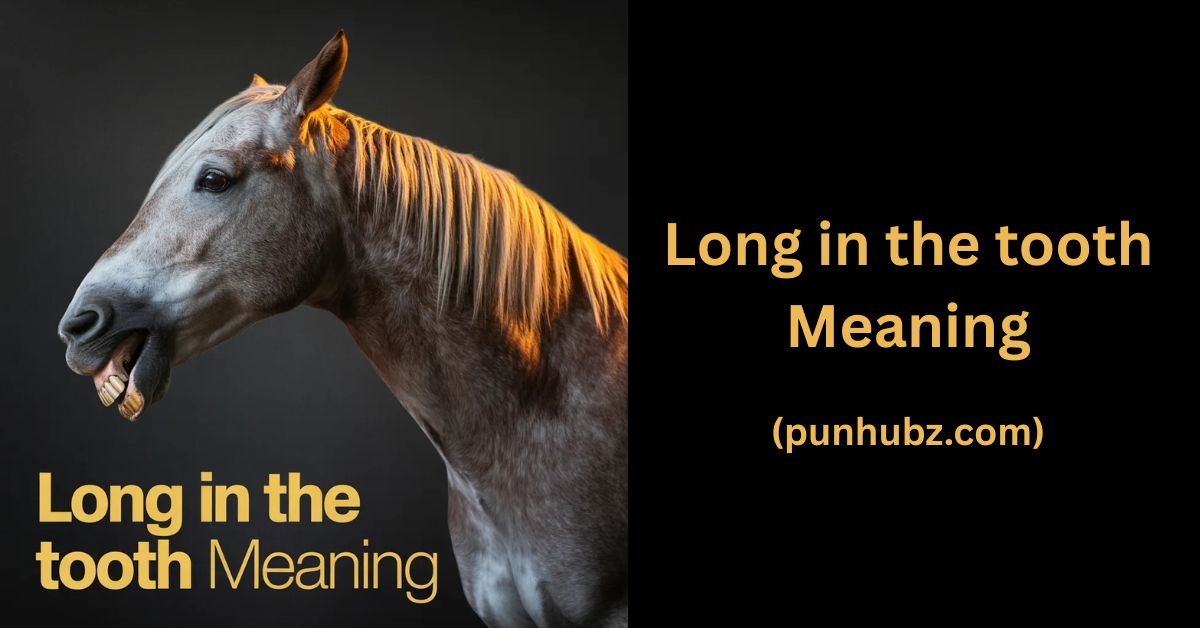
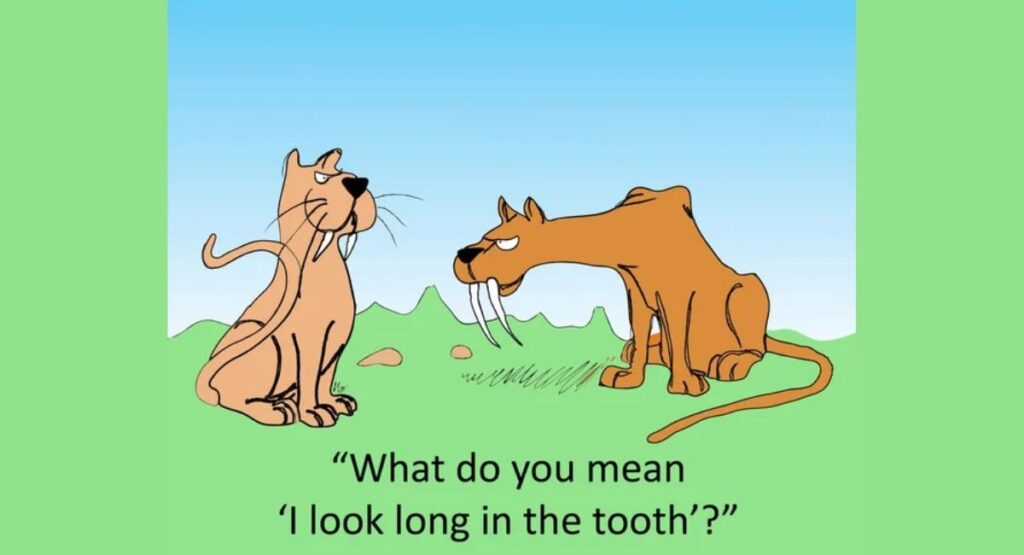
Long in the tooth meaning is essential for anyone looking to master idiomatic English. This phrase is not just about age—it carries subtle implications about suitability, relevance, and even social perception.
From describing people who may be getting on in years to objects or systems that are outdated or past their prime, the idiom adds color and nuance to everyday language. Knowing how to use it correctly can make your writing and speech more natural and expressive.
In this article, we explore the long in the tooth meaning, its origins, examples, synonyms, and practical applications to help you communicate with confidence and flair.
Key Takeaway
- Long in the tooth is an informal idiom referring to advanced age or ageing
- It often implies decline, limitation, or reduced suitability
- The phrase can apply to people, objects, institutions, and ideas
- Tone ranges from humorous to mildly critical
- Careful usage is essential to avoid sounding dismissive
Long in the Tooth Idiom: Meaning & Usage
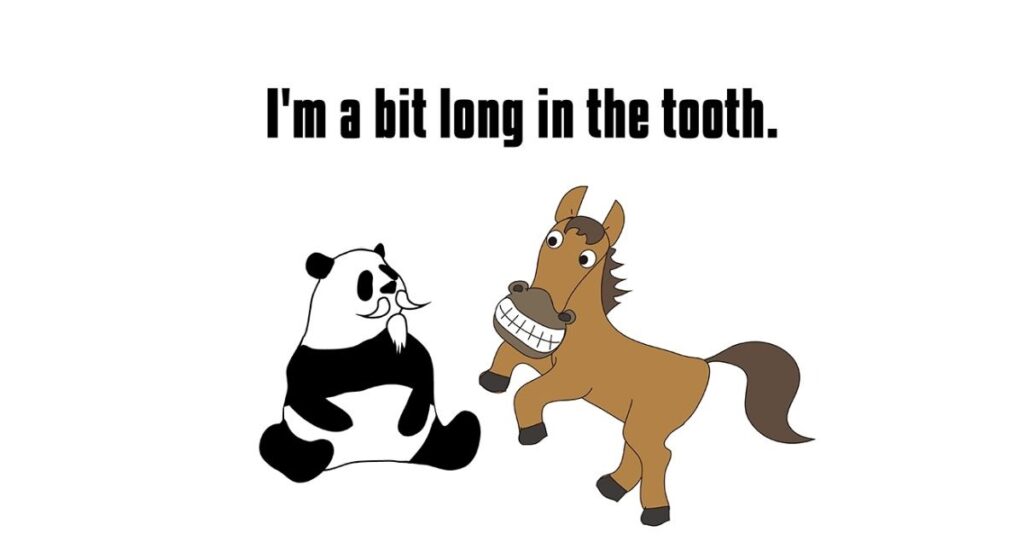
In contemporary English, long in the tooth describes someone or something that is perceived as old, ageing, or past its prime. Unlike neutral terms such as older or elderly, this idiom often introduces an evaluative judgment. It suggests not just age, but the sense that age may be affecting relevance, ability, or appropriateness.
The phrase is most often used informally and tends to appear in spoken English, journalism, opinion writing, and narrative prose rather than academic research. Its tone may be light-hearted, ironic, or subtly disapproving depending on context.
Example:
She wondered whether she was becoming too long in the tooth to start a new degree.
Phrase Overview
At its core, long in the tooth functions as a figurative descriptor rather than a factual statement. It does not specify age numerically. Instead, it relies on shared cultural assumptions about ageing and social expectations.
The phrase can signal:
- Physical ageing
- Social or professional limitations
- Cultural obsolescence
- Loss of novelty or innovation
Because of this flexibility, the idiom has remained productive in modern English and is frequently adapted to non-human contexts.
Interesting Fact About “Long in the Tooth”
An interesting fact about long in the tooth is that its origin is rooted in horse trading, yet it has seamlessly transitioned into human and metaphorical usage.
While the phrase literally referred to older horses with receding gums making their teeth appear longer, today it is widely applied to people, objects, and even ideas that are past their prime or outdated.
Despite being over 150 years old, the idiom has retained its vivid imagery and remains common in both British and American English, often used humorously or critically to comment on age, relevance, or declining performance.
Where Does the Phrase Come From?
The origin of long in the tooth lies in animal husbandry, particularly horse trading. Before modern veterinary science, estimating a horse’s age was essential for determining its value and working capacity.
Gum Recession and Tooth Appearance
As horses age, their gums gradually recede. This exposes more of the tooth surface, making the teeth appear longer than they were in youth. Traders learned to associate visibly longer teeth with older animals.
This physical sign became a practical ageing tool and eventually evolved into figurative language applied to humans.
Why It Matters in Orthodontics
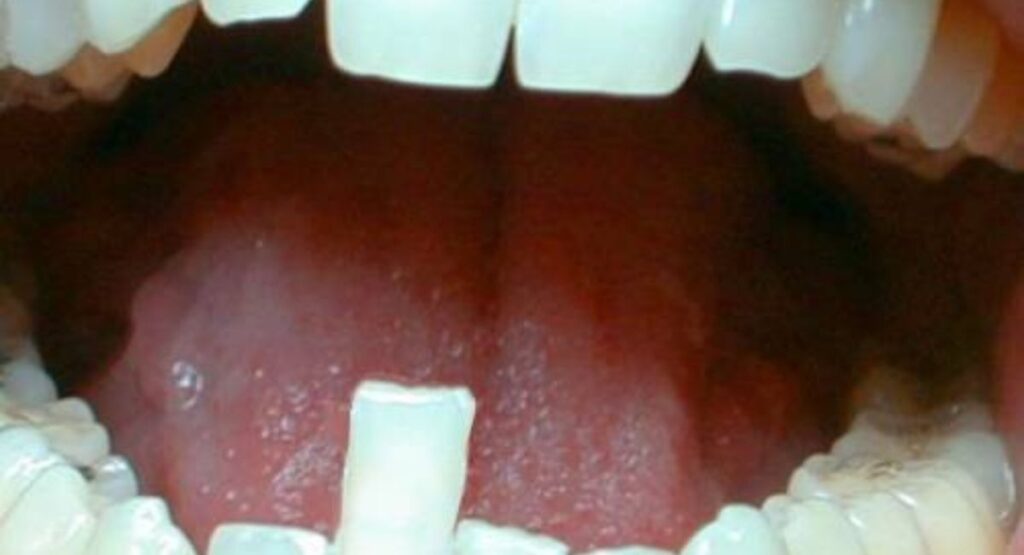
Interestingly, the same visual principle appears in human dentistry. Gum recession in older adults can cause teeth to appear elongated, reinforcing the metaphor’s intuitive logic. While the idiom is not used clinically, its imagery reflects observable biological processes.
Long in the Tooth in British English
In British English, long in the tooth is commonly used with understated humour or irony. It may appear in commentary on public figures, institutions, or traditions perceived as ageing.
British usage often emphasizes gradual decline rather than outright old age, allowing the phrase to be applied subtly.
Example:
Some critics argue that the policy framework is growing long in the tooth.
Long in the Tooth in American English
In American English, the idiom tends to be more direct. It is frequently synonymous with old or elderly, though still informal. American usage also extends strongly to technology and industry.
Example:
The system is reliable but increasingly long in the tooth.
Examples of ‘long in the tooth’ in a sentence long in the tooth
The idiom appears across a wide range of registers, from journalism to personal reflection.
- He felt long in the tooth compared to his younger colleagues.
- The aircraft fleet is effective but undeniably long in the tooth.
- Traditions that were once innovative can grow long in the tooth over time.
Usage in Sentences
When using the phrase, writers should consider audience and tone. In personal writing, it may sound self-reflective or humorous. In professional contexts, it can imply criticism and should be applied carefully.
Synonyms of Long in the Tooth
The following words and phrases express meanings similar to long in the tooth, with slight differences in tone and formality:
| Synonym | Usage and Nuance |
| Getting on in years | Polite and neutral, often used in formal or respectful contexts |
| Ageing | Descriptive and neutral, commonly used in academic or factual writing |
| Elderly | Formal term referring to advanced age, but less evaluative |
| Over the hill | Informal and often humorous or critical |
| Past one’s prime | Suggests decline from a previous peak of ability |
| Advanced in age | Formal and respectful, suitable for academic contexts |
| Old-fashioned | Used metaphorically for ideas or practices that feel outdated |
| Outdated | Commonly applied to technology, systems, or methods |
| No longer young | Mild and indirect, avoids negative judgment |
These synonyms vary in emotional weight. Some are neutral and respectful, while others imply decline or reduced relevance. Careful selection helps maintain appropriate tone, especially in academic or professional writing.
Antonyms of Long in the Tooth
The following words and phrases express the opposite of long in the tooth, emphasizing youth, freshness, or modern relevance:
| Antonym | Meaning and Usage |
| Young | Refers to chronological youth; neutral and literal |
| Youthful | Suggests energy, vitality, and freshness |
| New | Recently created or introduced; implies modernity |
| Cutting-edge | Innovative or ahead of its time; often applied to technology or ideas |
| Up-to-date | Current, relevant, or modern; can apply to knowledge, trends, or tools |
| Fresh | Energetic, recently made, or new in context; can be informal |
| Prime | At peak performance or in best condition |
| Modern | Reflects contemporary standards or trends |
Choosing the appropriate antonym depends on context. While some focus on age (young, youthful), others highlight relevance or innovation (cutting-edge, up-to-date). This distinction is useful when describing people, objects, or ideas.
Translations of “Long in the Tooth”
Across languages, translations focus on meaning rather than literal imagery.
| Language | Approximate Meaning |
| Spanish | Advanced in age |
| French | Getting old |
| Chinese | Too old to do something |
| Portuguese | Very old |
| German | Ageing or outdated |
This demonstrates how idiomatic meaning takes precedence over metaphor in translation.
Long in the Tooth Quiz
Test your understanding of the idiom long in the tooth with the following questions:
Question 1:Which sentence uses the idiom correctly?
A. The toddler is long in the tooth for nursery school.
B. The old computer is long in the tooth compared to the new models.
C. The painting is long in the tooth because it is colorful.
Answer: B
Question 2:What does “long in the tooth” most commonly imply?
A. Energetic and youthful
B. Old or ageing, sometimes past peak usefulness
C. Colorful and lively
Answer: B
Question 3:Choose the most formal synonym for long in the tooth.
A. Over the hill
B. Getting on in years
C. Past one’s prime
Answer: B
Question 4:Which of the following is NOT an appropriate context for using long in the tooth?
A. Describing an ageing horse
B. Commenting on outdated software
C. Praising a child for being energetic
Answer: C
Question 5:“The manager realized the old workflow system was _______ and needed to be replaced.”
A. long in the tooth
B. cutting-edge
C. youthful
Answer: A
Browse Nearby Words
- Be long in the tooth – Alternate form of the idiom with the same meaning.
- Over the hill – Informal expression indicating someone has passed their prime.
- Past one’s prime – Suggests decline from peak ability or performance.
- Getting on in years – Polite and neutral way to describe ageing.
- Ageing – Descriptive term referring to becoming older.
- Elderly – Formal term for older people.
- Old-fashioned – Used metaphorically for ideas, methods, or objects that feel outdated.
- Outdated – Applied to things, systems, or trends that are no longer current.
- Senior – Respectful term for an older person.
- Mature – Can describe both age and wisdom, depending on context.
These related words help readers expand their understanding of age-related idioms and expressions, while highlighting subtle differences in tone, usage, and formality.
Browse Alphabetically
Here are some English words and idioms beginning with “L” that are related to or near long in the tooth:
- Long house – A traditional building type, typically in certain cultures.
- Long illness – Refers to a prolonged sickness.
- Long in the tooth – Idiom meaning old or ageing.
- Long intermission – An extended break, often in a performance or event.
- Long interval – A significant period of time between events.
- Long iron – A type of golf club used for longer shots.
Browsing alphabetically helps learners locate words systematically and see how idioms like long in the tooth fit within broader language patterns.
Word of the Day
Long in the Tooth is today’s idiom, used to describe someone or something that is old, ageing, or past its prime. The phrase often carries a lightly humorous or mildly critical tone, suggesting that age may have reduced suitability or relevance.
Its origin comes from horse trading, where older horses’ gums recede, making their teeth appear longer.
For example: “The old software is getting long in the tooth compared to newer versions.”
Expanding your vocabulary daily with idioms like this strengthens comprehension of figurative language, cultural nuance, and subtle differences in tone, helping learners use English more naturally.
Learn a New Word Every Day
Regularly learning idioms like long in the tooth allows learners to go beyond simple definitions and understand the cultural attitudes and social nuances embedded in language.
Daily practice with such expressions improves comprehension, helps recognize tone and context, and enables more natural, fluent use of English.
By exploring idioms in sentences, translations, and real-life examples, learners gain insight into how figurative language conveys subtle meaning and emotion.
FAQ’s
What is the meaning of long in the tooth?
It is an idiom meaning someone or something is old, ageing, or past its prime.
Where does the saying “too long in the tooth” come from?
It originates from horse trading, where older horses’ gums recede, making their teeth appear longer.
What causes long in the tooth?
Ageing causes physical changes, and the idiom figuratively reflects being old or less effective.
How do you use long teeth in a sentence?
Example: “The old software is getting long in the tooth compared to the new version.”
What’s another word for long in the tooth?
Synonyms include over the hill, past one’s prime, and getting on in years.
Why do people get long in the tooth?
It refers to natural ageing or becoming less suitable for certain tasks over time.
Is long in the tooth offensive?
It can sound mildly critical, so use it carefully in sensitive or formal contexts.
What is the meaning of the idiom “in the teeth of”?
It means facing something difficult or opposing force directly, e.g., “They worked in the teeth of strong opposition.”
What is the idiom long teeth?
It usually refers to someone being ambitious or grasping, as in “long in their teeth” metaphorically wanting more.
Conclusion
Understanding the long in the tooth meaning enriches both spoken and written English by offering a vivid way to describe age, relevance, or decline. Beyond people, this idiom can be applied to technology, trends, systems, and ideas that are past their prime or outdated, making it versatile and expressive.
Recognizing its tone—whether humorous, mildly critical, or informal—ensures effective communication. By exploring examples, synonyms, and cultural context, learners gain a deeper grasp of how long in the tooth meaning reflects social perception and figurative language. Mastery of this phrase helps convey nuance and adds sophistication to everyday conversation.
