
The red spider lily meaning carries a rare blend of beauty and mystery that has fascinated people for centuries. Known for its vivid scarlet petals and elegant, web-like form, this flower often appears just as seasons shift, creating a sense of otherworldly timing.
Across Asian cultures, it is linked to themes of memory, transformation, and emotional transition, making it far more than a striking autumn bloom. Its dramatic appearance and deep symbolic roots have placed it at the center of legends, poems, and spiritual traditions.
Whether admired for its color or its cultural weight, the red spider lily continues to evoke reflection and awe.
Key Takeaways
| Theme | Summary |
| Symbolism | Associated with death, rebirth, separation, and spiritual transition. |
| Cultural Depth | Strongly rooted in Japanese, Chinese, and Korean traditions. |
| Appearance | A brilliant red flower with thin, curling petals and long filaments. |
| Occasions | Used for funerals, memorials, and spiritual observances. |
| Significance | A reminder of impermanence and the cyclical nature of life. |
What Is the Red Spider Lily?
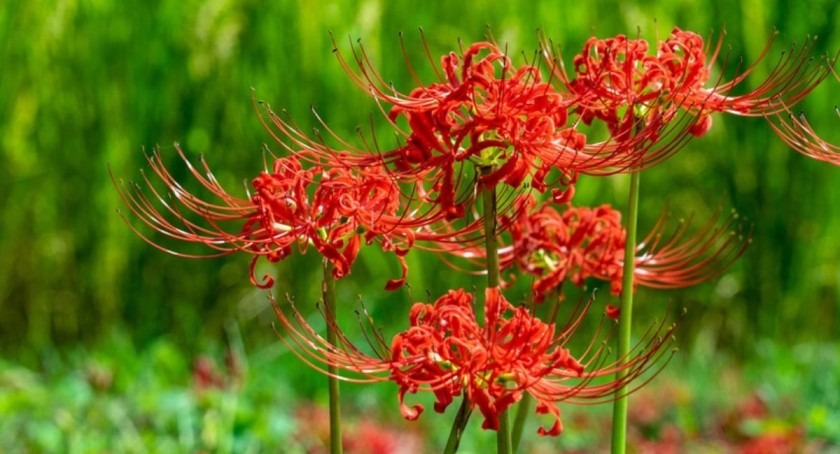
The red spider lily, Lycoris radiata, is a perennial flowering plant belonging to the Amaryllidaceae family. It blooms in late summer or early autumn, usually just before seasonal transitions.
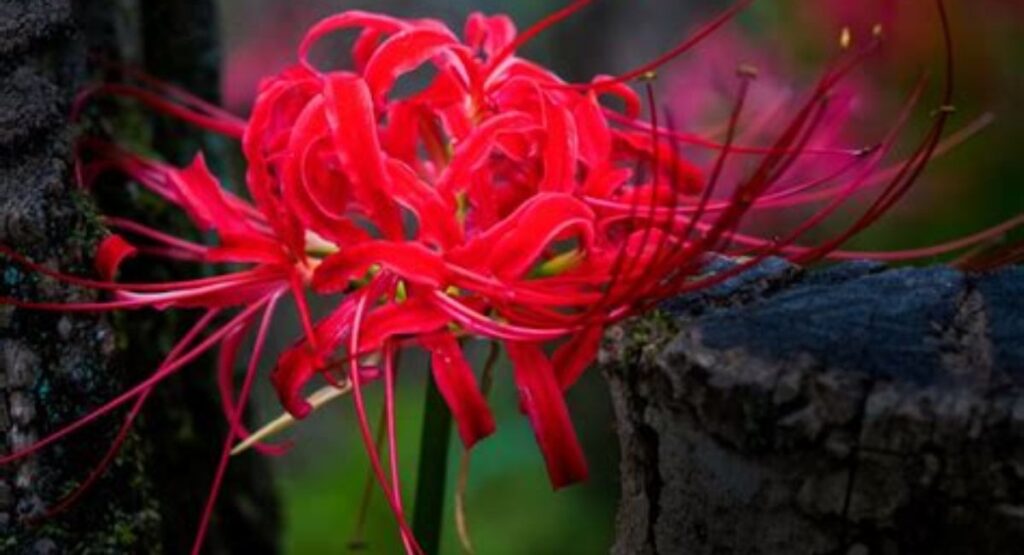
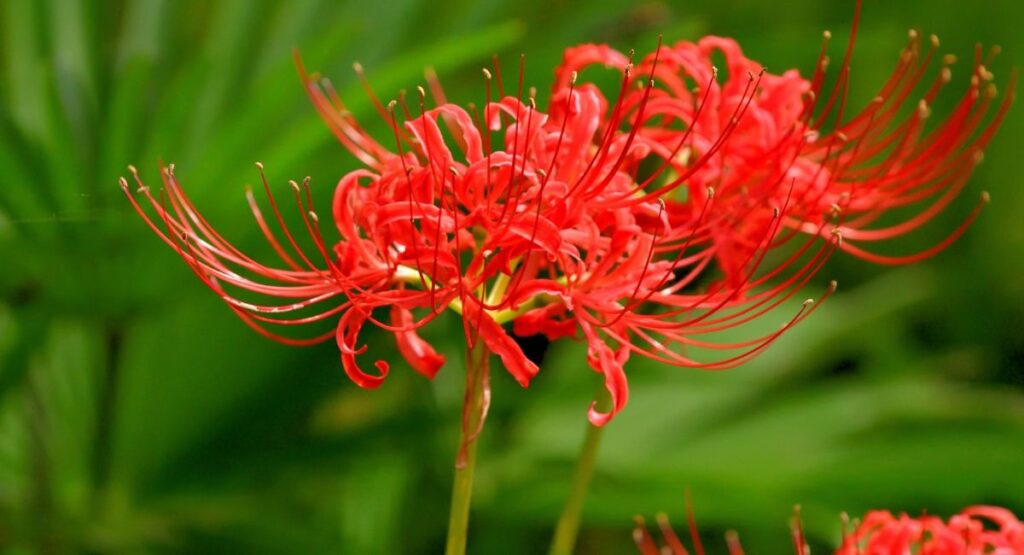
Its striking scarlet petals curve backward, while long, thread-like stamens extend outward, giving the flower its “spider-like” appearance. Botanically, it is a bulbous plant native to East Asia but widely naturalized in other regions due to its ornamental appeal.
Although admired for its beauty, the red spider lily has long held a dual reputation. Its intense color and unusual form attract admiration, yet its symbolic ties to death, memory, and spiritual passage give it a deeper emotional weight.
This contrast between aesthetic charm and somber meaning makes it one of the most intriguing flowers in Asian cultural history.
History of the Red Spider Lily
The plant’s origins can be traced back to China, from where it spread to Japan and Korea. Historical records suggest it reached Japan more than a thousand years ago, often planted near temples, graveyards, and riverbanks.
Over time, religious communities and poets began to associate the flower with boundaries—between seasons, between life and death, and between the material and spiritual worlds.
The flower’s botanical behavior also shaped its symbolism. Because the blooms appear suddenly after the rains, often before the leaves emerge, people begin to interpret the flower as a messenger arriving quickly, glowing intensely, and fading soon after. This ephemeral pattern inspired poems, stories, and artwork across East Asia.
Flower Meanings
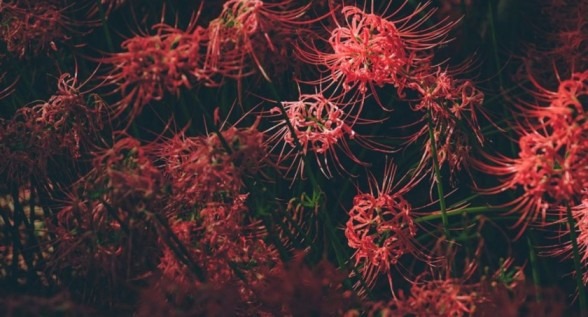
The red spider lily is known for symbolizing death, separation, and spiritual transition. Its sudden bloom and striking red color link it to final goodbyes and the cycle of rebirth.
While often tied to loss, it also reflects renewal and the emotional strength found in moving forward.
Death and Rebirth
In many traditions, the red spider lily represents the cycle of death and rebirth. The flower’s sudden appearance after long dormancy mirrors the idea of life returning after darkness.
Buddhist symbolism connects the flower to the “shore of the afterlife,” reinforcing themes of transformation and continuation rather than finality.
Final Goodbyes
The flower is widely understood as a symbol of parting. In folklore, red spider lilies bloom along paths where people say their last goodbyes.
This association with farewell rituals is especially common in Japanese and Chinese stories. In some legends, the flower marks the boundary where souls walk before crossing into the next realm.
Cultural Significance
The red spider lily holds a strong cultural presence across East Asia, where it is often linked to funerals, ancestral remembrance, and the passage between life and death. In Japan and Korea, it appears near temples and grave sites, reinforcing its role as a symbol of farewell and spiritual transition.
In China, it represents the meeting point between the living and the departed, carrying themes of memory and eternal connection.
Red Spider Lilies in Japan
In Japan, the red spider lily is known as Higanbana, meaning “flower of the other shore.” It is deeply tied to Buddhism and the autumn equinox, a period known as Higan, when families honor their ancestors. Traditionally, the flower is planted around graveyards, temples, and rice fields.
Its symbolism in Japan is layered:
- Separation and remembrance
- Impermanence of life
- Protection of sacred spaces
Japanese literature frequently portrays the flower as an emblem of fleeting beauty and tragic love. Modern anime and films also use the red spider lily to create emotional or dramatic atmospheres.
Red Spider Lilies in Korea
In Korea, the flower is called Haneul Hwa, meaning “flower of the sky,” though other regional names exist. Korean folklore often frames the flower as a symbol of longing and unresolved emotions.
It is sometimes linked to stories of lovers who part unexpectedly, with the flower representing lingering emotions that survive separation.
Meaning in Spirituality and Relationships
The flower’s spiritual meaning revolves around transitions. It represents the movement between states—life to death, sorrow to healing, and endings to new beginnings.
Although it is not traditionally used as a romantic symbol, its deeper emotional themes can resonate with relationships, especially those marked by distance, closure, or growth after loss.
A Little Story
One popular East Asian legend tells of two celestial beings: Manju, the guardian of the flower, and Saka, the guardian of its leaves.
They were forbidden to meet, yet fell in love. When they disobeyed the rule, the gods cursed them—ensuring that the flower and its leaves would never appear together.
This myth explains why Lycoris radiata blooms without its leaves and symbolizes love that cannot coexist.
How Does It Look?
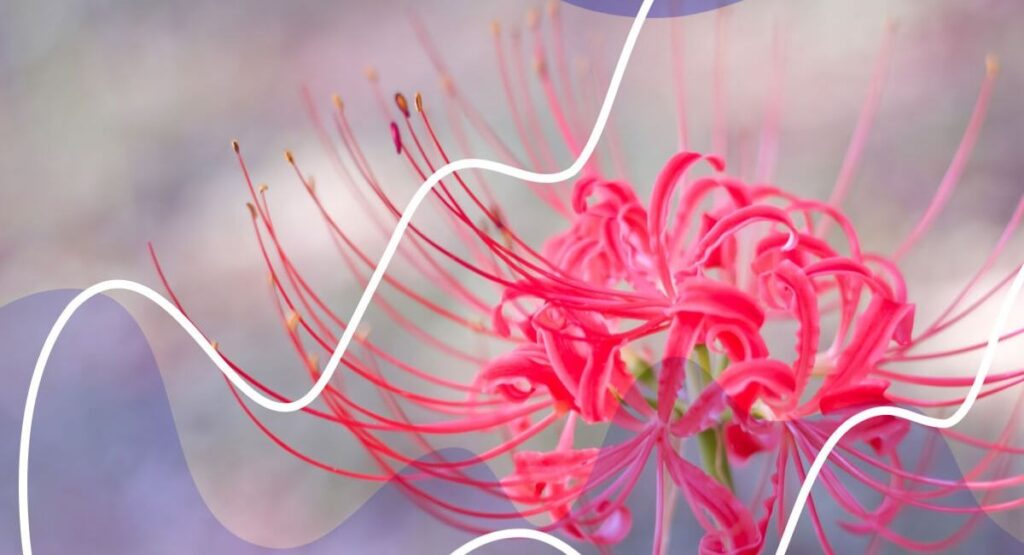
The red spider lily is visually distinct. Its petals form a circular pattern, curling back as if pulled by an invisible force. Long stamens extend outward, creating a delicate web-like structure.
The flower usually reaches 30 to 70 centimeters in height. Because the blooms appear before any foliage, the flowers often stand alone, giving them a mysterious, almost otherworldly presence.
Flower Meanings
| Meaning | Context |
| Death | Linked to graveyards, funerals, ancestral rituals |
| Rebirth | Sudden blooming after long dormancy |
| Farewell | Symbol of parting paths |
| Transition | Represents crossing between worlds |
| Memory | Reminder of loved ones who passed away |
| Emotional Closure | A symbol of letting go and healing |
Red Spider Lily Facts
- Scientific name: Lycoris radiata
- Family: Amaryllidaceae
- Native region: China, Japan, Korea
- Blooming season: Late summer to early autumn
- Toxicity: Bulbs are poisonous if ingested
- Habitat: Riverbanks, temple grounds, moist fields
- Color variations: Mostly red, with rare white or yellow varieties
Historical and Cultural Significance
The red spider lily has long been entwined with history and culture, especially in East Asia. In Japan, it’s associated with the Higan Festival, guiding souls and marking the autumn equinox.
In China, it symbolizes the connection between life and death, often appearing in poetry and art to honor ancestors.
Across cultures, its striking red blooms represent impermanence, remembrance, and the cycles of life, making it both a visual and symbolic emblem of endings, transitions, and the delicate balance between beauty and mortality.
What Does the Red Spider Lily Symbolize?
Across Asia, the flower is viewed as a guide for souls, lighting the path toward the afterlife. In Buddhism, the red spider lily is believed to bloom at the moment of rebirth, symbolizing both the end of one cycle and the beginning of another.
This connection to transition gives the flower a central place in ceremonies that honor ancestors.
How Has It Been Represented in Various Cultures?
In Chinese folklore, the flower grows on the “bridge between worlds.” In Japanese poetry, it often reflects sorrow mixed with beauty. Korean stories emphasize longing and emotional endurance.
Outside Asia, the flower has become a symbol of mystery, often used in art and literature to evoke themes of memory, time, and spiritual awakening.
Occasions Suited for the Red Spider Lily
The red spider lily is ideal for ceremonies and moments of remembrance. It is commonly used in funerals, memorial services, and ancestral observances, symbolizing farewell, respect, and the cycle of life and death.
Beyond solemn occasions, its striking red blooms also make it a thoughtful choice for autumnal gardens and artistic floral arrangements that celebrate reflection, remembrance, and emotional depth.
Memorial Services
Because of its strong ties to remembrance, the red spider lily is commonly used during memorial ceremonies.
It symbolizes respect for the departed and recognition of life’s transience. Its presence adds emotional depth to spaces dedicated to reflection.
Funerals
Although not traditionally used for celebratory events, the red spider lily is appropriate for funerals or commemorative gatherings.
Its symbolism aligns with themes of peaceful transition and dignity in farewell.
Where Is Lycoris Radiata Found?
The plant grows naturally in East Asia but is now cultivated in many parts of the world with mild climates. It thrives in moist, well-drained soil and often appears along rivers, fields, and forest edges.
Because it spreads through bulbs, large clusters are common, creating striking displays of red during the blooming season.
What Makes Lycoris Radiata Unique?
The separation between flowering and leafing makes this species unusual. Flowers bloom alone, then die back before leaves appear.
This biological pattern, combined with its intense color, contributes to the mystical aura around the plant.
The bulb’s toxicity historically protected crops by deterring pests, which is why the flower was planted near agricultural fields.
What Does Lycoris Radiata Represent in Different Cultures?
The flower’s meaning shifts according to local beliefs:
| Region | Meaning |
| Japan | Death, transition, protection, ancestral memory |
| China | Reincarnation, otherworldly guidance, spiritual crossing |
| Korea | Longing, unresolved love, emotional endurance |
| Western interpretations | Mystery, beauty, spiritual symbolism |
What Is the Best Way to Care for Lycoris Radiata?
- Plant bulbs in late summer.
- Choose a spot with partial sun and well-drained soil.
- Water regularly during early growth but reduce watering once established.
- Allow leaves to grow fully after flowering; this strengthens the bulb.
- Protect from frost in colder climates.
Where Can You Buy Lycoris Radiata?
The flower is available through:
- online plant nurseries
- local garden centers
- specialty bulb suppliers
- botanical garden shops during seasonal sales
FAQ’s
What do red spider lilies symbolize?
They symbolize death, final goodbyes, and the transition between life and the afterlife.
Why do people get red spider lily tattoos?
People choose them to represent transformation, closure, or the strength to move forward after loss.
What is the spiritual meaning of a red lily?
It represents renewal, emotional release, and the soul’s journey through change.
Is it okay to touch a red spider lily?
Yes, you can touch it, but avoid ingestion because the plant is toxic.
Are red spider lilies bad luck?
In some cultures they are viewed as bad luck due to their association with funerals and separation.
What is the myth of the spider lily?
A common myth says they bloom where souls part ways, symbolizing paths that never cross again.
What is the rarest color of lily?
Black and deep blue lilies are considered the rarest, though most are cultivated variations.
What do red spider lilies attract?
They primarily attract butterflies and pollinating insects.
Are red lilies poisonous to humans?
Yes, the bulbs contain toxins that can cause nausea or irritation if ingested.
What does the red spider lily flower of death mean?
It signifies the boundary between life and death and honors the memory of those who have passed.
What does a spider lily mean in a relationship?
It can reflect emotional distance, closure, or the acceptance of a chapter ending.
What does the red spider lily mean in Chinese culture?
In Chinese tradition, it represents remembrance, the spirit world, and the separation of loved ones.
Conclusion
The red spider lily meaning brings together beauty, symbolism, and emotional depth in a way few flowers can match. Its striking red petals hint at passion, yet its cultural roots point toward remembrance, transition, and the quiet acceptance of change.
Whether seen in a garden, a poem, or a traditional ceremony, this flower invites reflection on life’s impermanence and the ties that continue beyond separation. Its presence across cultures shows how one bloom can carry layered stories shaped by history and belief.
By understanding its symbolism, we appreciate not only its visual impact but the deeper message it whispers about endings, new beginnings, and memory.
